
Sex Offender Checks in Clayton County
The Georgia Bureau of Investigation, or GBI, operates the free public registry under O.C.G.A. §42-1-12. It draws on records entered and maintained by several agencies. The local sheriff maintains registration information, corrections and parole agencies enter records for people in their custody, and GBI handles some people who relocate from another state. That shared workflow is why a Clayton County sex offender result should be treated as a current agency report, not a complete historical judgment.
Start with a name when the spelling and identity are known. Use County, City, ZIP, or the map path when the aim is location awareness. A name match still needs review against age, physical details, aliases, offense information, and registration agency. GBI warns that it cannot guarantee the completeness or accuracy of supplied data, so an address concern should go to the Clayton County sheriff at (770) 471-1122.
The official Georgia registry search shows the conditions gate and the public search choices before a user reaches results.
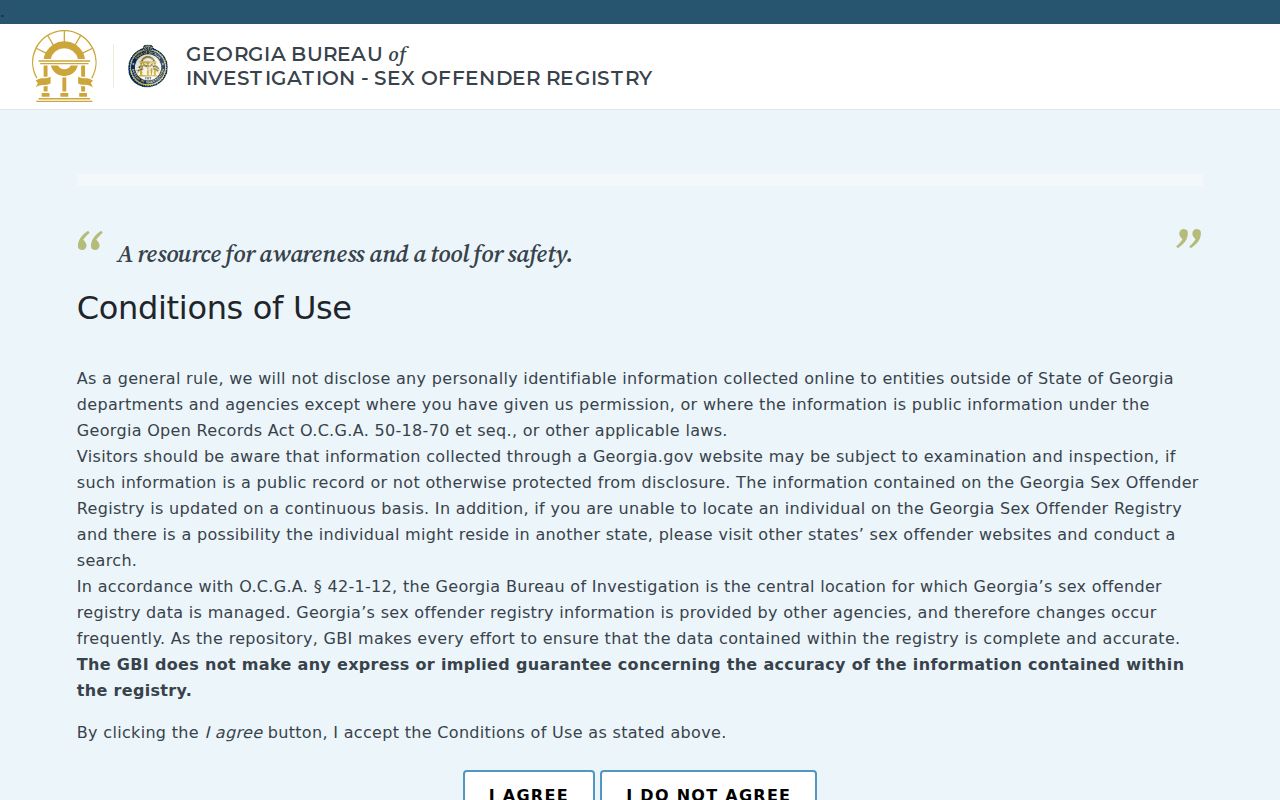
The screen makes clear that a Clayton County search begins with acceptance of the site's terms and a CAPTCHA, not with an unrestricted data feed.
Why Clayton County Registry Results Change
Georgia registry information can change daily because the sheriff must update supplied changes within two business days. A person who must register generally reports in person to the sheriff within 72 hours after release, placement on probation or parole, or entry into Georgia. Moves and other required changes generally have the same 72-hour reporting window. Someone without a fixed home registers in the county where that person sleeps and supplies the sleeping location.
Annual renewal occurs in person during the 72 hours before the registrant's birthday and includes a new photograph and fingerprints. A person classified as a sexually dangerous predator reports again six months after the birth month. These time windows explain why an older screenshot, saved result, or remembered address should never replace a fresh Clayton County registry search.
The GBI's registry FAQ explains registration, renewal, missing results, and the roles played by different agencies.
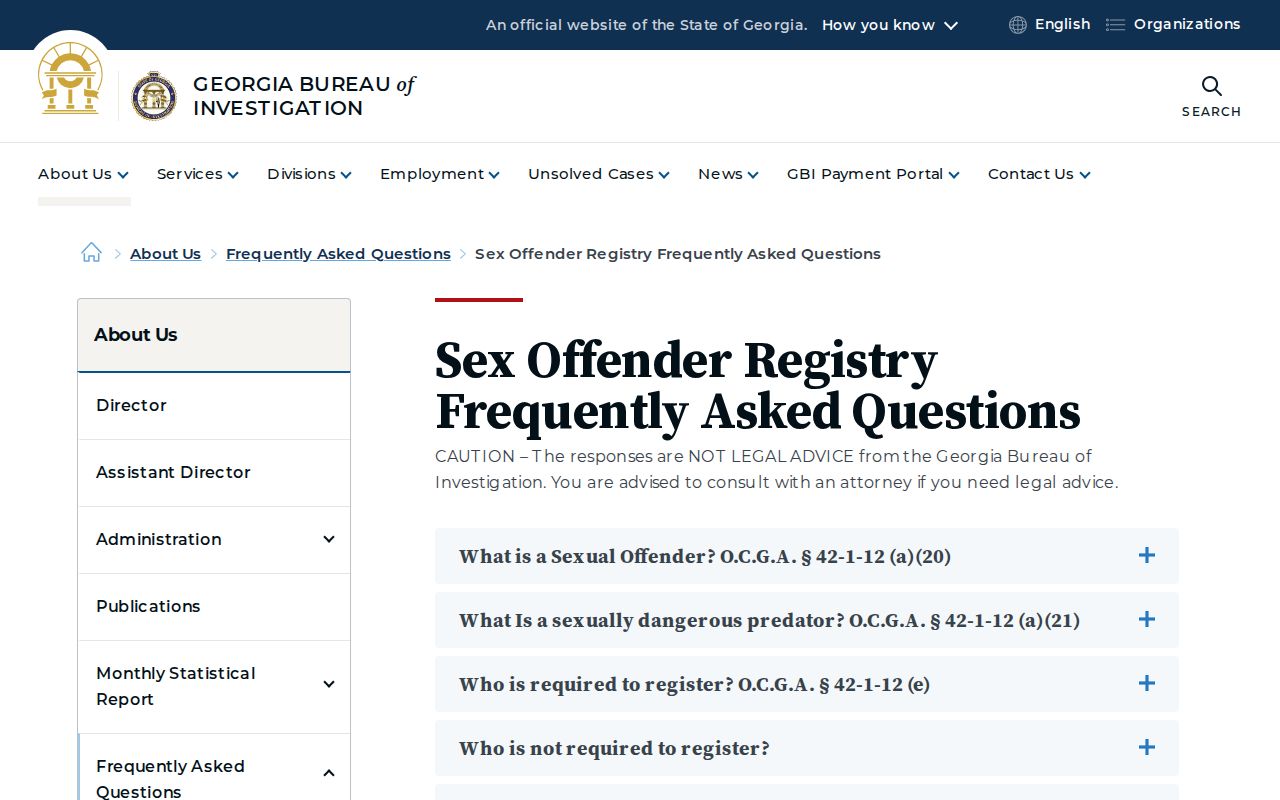
Those answers help separate a reporting deadline from the date on which a change becomes visible to a Clayton County public user.
How to Search the Georgia Sex Offender Registry
The GBI portal is free and requires no account, but it does require acceptance of its Conditions of Use and completion of a CAPTCHA. The search offers an offender path and a map path. Use the Clayton County filter to narrow statewide records, then refine only with information that is reasonably certain. Overly narrow spelling or location terms can hide a possible record.
- Open the official portal, read the conditions, select “I agree,” and complete the CAPTCHA.
- Choose Offender Search for a name or Map Search for a location, then select Clayton County when useful.
- Review possible results without assuming that a similar name identifies the right person.
- Open the profile and compare physical, offense, address, status, agency, and verification details.
| Field Label | Type | Required | Notes |
|---|---|---|---|
| Last / First Name | Text | Not stated | Name search and refinement |
| County | Dropdown | Not stated | Select Clayton from all Georgia counties |
| City / ZIP | Text or dropdown | Not stated | Location refinement |
| Street Address | Text | Map path | Starting point for proximity search |
| Radius | Dropdown | Map path | Exact values are CAPTCHA-gated |
| CAPTCHA | Image and text | Yes | Appears after conditions acceptance |
Clayton County Search and NSOPW
The Georgia portal is the direct state source for a Clayton County sex offender search. The U.S. Department of Justice's National Sex Offender Public Website, or NSOPW, adds a cross-state layer when a person has lived elsewhere or a location sits near a state line. NSOPW routes queries across participating jurisdictions; it does not replace the source registry that supplies a result.
The official NSOPW search is useful when a check should reach beyond Georgia.
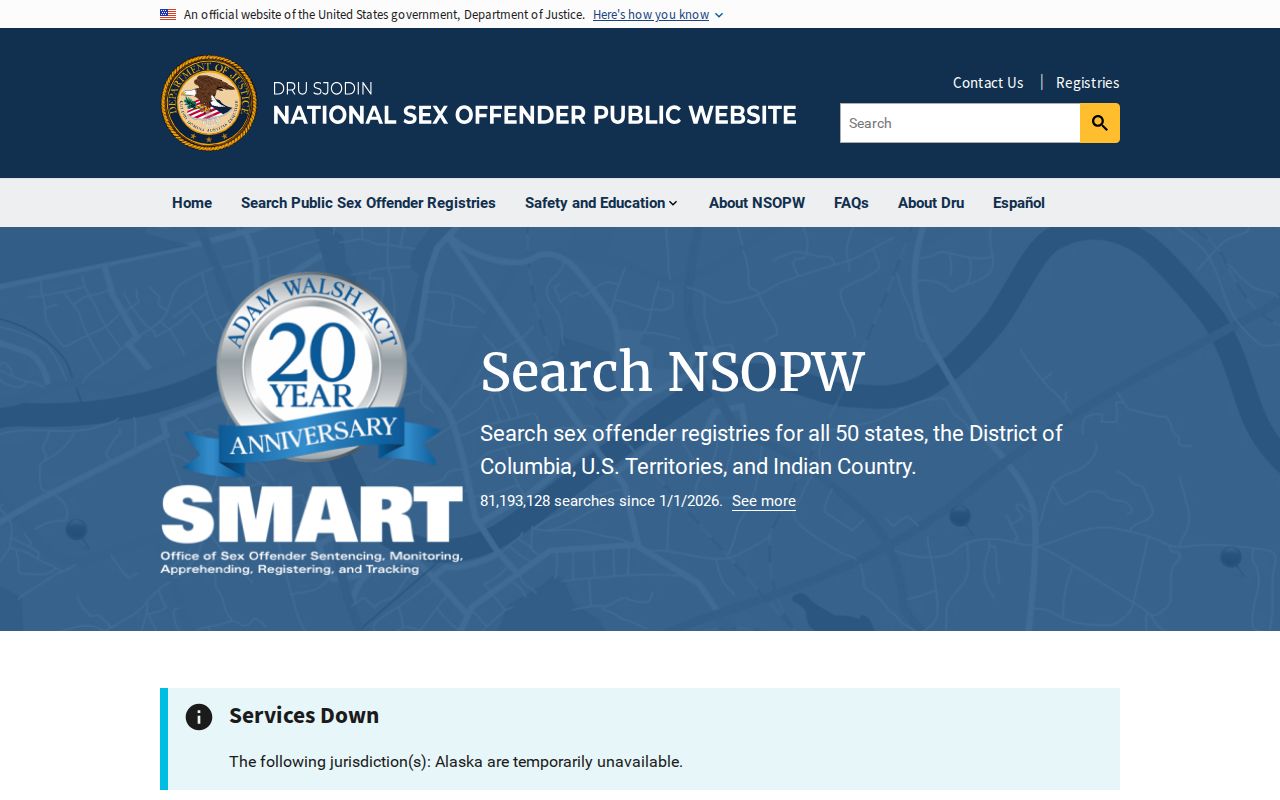
For a Georgia result, return to the GBI profile and the Clayton County sheriff for the most direct record context and address verification.
Inside a Registry Profile
A public profile combines identity descriptors with registration and offense data. It may show a photograph, aliases, date of birth or age, sex, race, height, weight, hair, eyes, scars, marks, tattoos, vehicles, and the agency responsible for supervision or registration. Read the status and verification dates along with the address. None of those fields proves present misconduct, and the profile is not a complete criminal history.
| Name & Aliases | Primary name and other reported names used to refine identity. |
|---|---|
| Photo & Physical Description | Photo, sex, race, height, weight, hair, eyes, birth details, and reported marks. |
| Registered Address | Reported address or sleeping location, county, and related location data. |
| Offense & Statute | Offense, conviction date and state, statute, and victim category when supplied. |
| Risk Classification | Level I, Level II, sexually dangerous predator, or a pending or legacy status. |
| Registration Status | Status plus registration and verification dates and responsible agency. |
When a Clayton County Name Is Missing
No result does not always mean that a person has never had a qualifying case. The GBI says a record may be absent because the person is deceased, has no current registration duty, received a successful First Offender sentence, has newly reportable data that has not yet been submitted, or was searched with incorrect terms. Search spelling variants and aliases before drawing a conclusion.
A missing name also should not be filled in with rumor or an old third-party copy. Contact the Clayton County sheriff when the concern is a local address or possible failure to register. Court records can explain the underlying case, but they serve a different purpose from the registry and do not establish current registration status.
The GBI's Georgia registry information page provides the official explanation, downloads, and accuracy disclaimer.
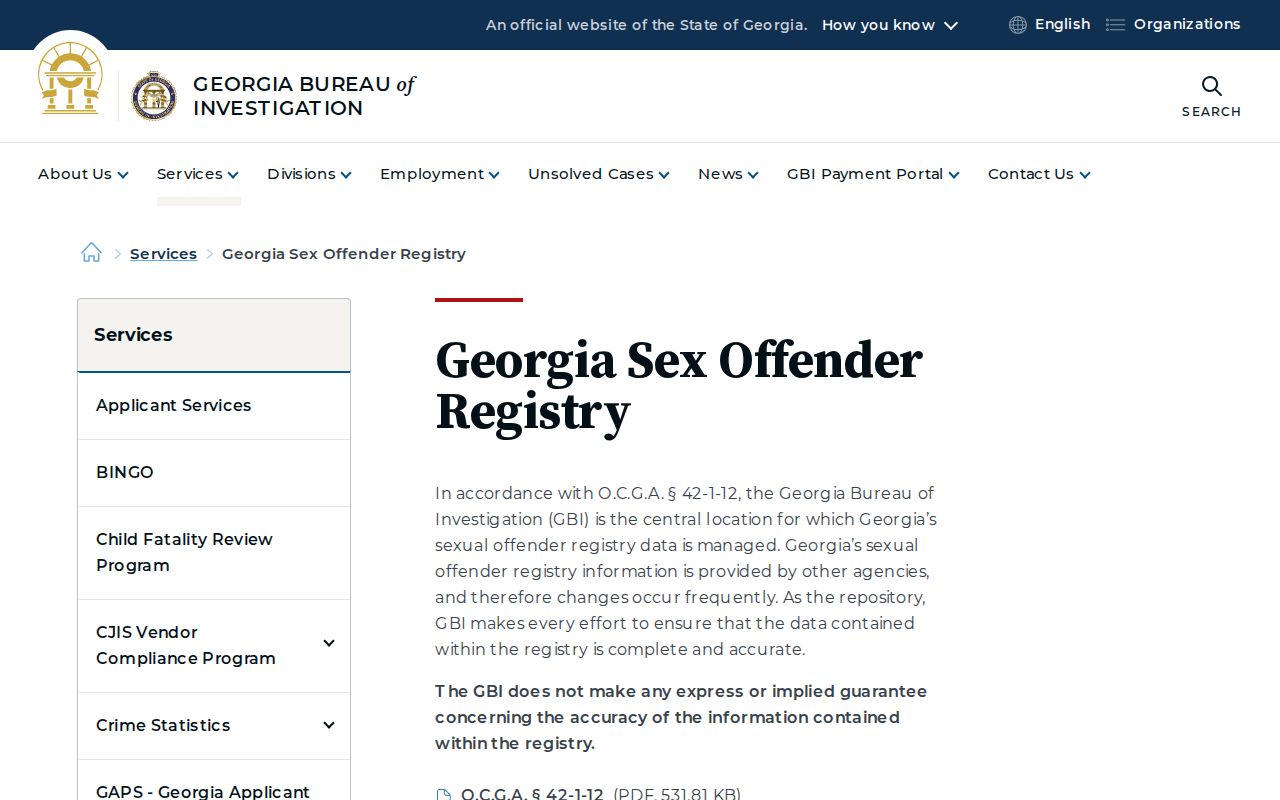
That source is the sound fallback when a Clayton County query does not answer whether a record should be present.
Georgia Registration Levels and Requirements
Georgia's Level I, Level II, and sexually dangerous predator labels are risk assessments, not federal tiers with automatic 15-year or 25-year end dates. Registration is generally for life unless a court or another legal route removes the duty. Classification matters, but a Level I label does not by itself erase a Clayton County registry entry.
| Risk Label | Duration | Verification |
|---|---|---|
| Level I | Generally life unless legally removed | Annual in-person renewal near birthday |
| Level II | Generally life unless legally removed | Annual in-person renewal near birthday |
| Sexually Dangerous Predator | Generally life, with lifetime electronic monitoring | Annual renewal plus another report six months later |
| Not Yet Classified | Pending or legacy assessment, not nonregistration | Underlying statutory duties still apply |
Clayton County and the 1,000-Foot Rule
Georgia residency restrictions require close attention to the offense date. The GBI's O.C.G.A. §42-1-16 material states that people whose qualifying act occurred from July 1, 2006, through June 30, 2008, cannot reside within 1,000 feet of a childcare facility, church, school, or area where minors congregate. Listed examples include parks, playgrounds, skating rinks, neighborhood centers, gymnasiums, school-bus stops, and public or community pools.
Ownership and lease exceptions and proof rules can affect the analysis. It would be inaccurate to claim that each person shown in a Clayton County sex offender search has precisely the same distance restriction. The GBI residency-law page supplies the date-sensitive statutory text.
The offense date and any documented exception must be checked before applying the rule to a particular Clayton County address.
Removing a Clayton County Registry Duty
Removal is a court process, not an automatic effect of a lower risk label. O.C.G.A. §42-1-19 provides routes tied to completed custody and supervision, qualifying incapacity, certain offenses that later would be punished as misdemeanors, some kidnapping or false-imprisonment cases without a sexual offense, and statutory sentence criteria. An ordinary route can involve ten years after all prison, parole, supervised release, and probation are complete, or a Level I classification.
A petition based on a Georgia conviction goes to the Superior Court of conviction. For an out-of-state conviction, it goes to the Superior Court where the person lives. The district attorney and relevant sheriffs must be served. A denial generally bars another petition for two years. Anyone evaluating a Clayton County profile should therefore distinguish a possible right to petition from an order that has actually ended the duty.
The GBI's risk-classification material explains the board labels and sexually dangerous predator requirements.
The classification shown on a Clayton County profile is one fact in the legal process, not a substitute for the court's removal order.
Community Notification and Lawful Use
The registry supports awareness, address verification, and practical safety planning. It should be used to read official information and, when needed, report a specific concern through law enforcement. Do not confront a person, publish accusations beyond the official record, or treat a registry entry as evidence of a new offense. GBI's disclaimer also makes independent verification important.
Use registry data lawfully: Do not harass, threaten, intimidate, or engage in vigilantism. Official research found penalties for registration failures under O.C.G.A. §42-1-12 and related evasion conduct, but no specific Georgia public-user anti-harassment crime tied solely to registry use, so none is claimed here.