
Clayton County Arrest History
Arrests in Clayton County can originate with the sheriff, Clayton County Police, Georgia State Patrol, a school police unit, or an incorporated city's police department. Clayton County Police serves unincorporated areas. Forest Park, Riverdale, Lovejoy, Jonesboro, Morrow, and Lake City maintain their own police jurisdictions. The agency that made the arrest generally keeps the incident or arrest narrative, even when the Clayton jail later holds the person.
An arrest creates several linked records. Police document the event and alleged charge. Jail staff create intake, fingerprint, photograph, custody, and bond entries. A magistrate handles initial matters. GCIC receives the fingerprint cycle, and a prosecutor or grand jury may later alter or decline charges. None of those steps alone proves guilt.
Clayton Arrest Portal Deep Dive
The free Clayton inmate portal requires no login. Its name box accepts up to 70 characters and is intended for an active inmate's last name, with a first name or initial used to narrow results. Separate links expose the 48-hour, 14-day, and 31-day docket books. These booking-date views are more useful for recent intake than the active-name list after a person has been released.
The official Clayton inmate search shows both routes.
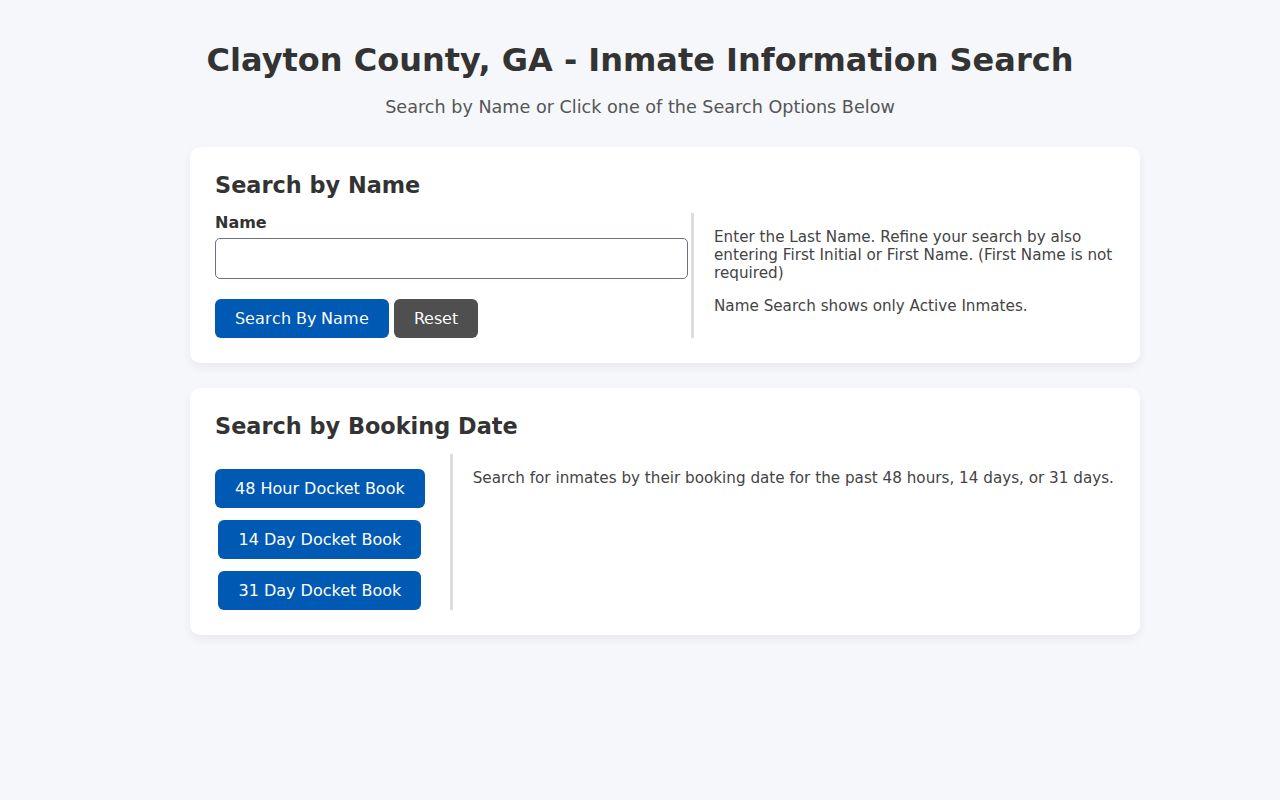
The portal's narrow custody scope is useful. It also means an absent name does not erase an older police report, court docket, or GCIC cycle.
Looking Up Clayton County Arrests
No one Clayton County database covers the narrative, booking, prosecution, and statewide history. Follow the record from custody to its source. If the arresting agency is unknown, the jail row or later court file may identify it. When online access fails, use the sheriff's records line, the police records counter, the correct clerk, or a formal Georgia Open Records Act request.
- Check the active-inmate name search, then the 48-hour, 14-day, and 31-day docket books.
- Call jail information at (770) 477-4400 or Sheriff Records at (770) 477-4404 to clarify custody.
- Request the narrative from the arresting county or city police agency, not automatically from the sheriff.
- Search Clayton JIS for the filed charge and disposition, then use Georgia Felon Search only for its narrower statewide felony-conviction product.
- Submit a county GovQA request when the proper county custodian has no direct online delivery route.
The process preserves the distinction between a booking claim and a court result. For a fuller view of the prosecution, use the Clayton County criminal court case search after a filing appears.
Find Clayton's Arresting Agency
Agency geography is the most common routing problem. A person booked at the county jail may have been arrested by Clayton County Police, the sheriff, or a city department. Ask the agency named in the record for the incident narrative. Ask the jail for custody and booking data. Ask the clerk for filed charges and outcomes.
| Agency | Records Contact |
|---|---|
| Clayton County Police | 7911 N. McDonough Street; (770) 477-3747 option 1 |
| Clayton Sheriff / Jail | Banke visitor entrance; (770) 477-4404; jail (770) 477-4400 |
| Forest Park Police | 320 Cash Memorial Boulevard; (404) 366-4720 |
| Riverdale Police | 6690 Church Street; (770) 996-3382 |
| Lovejoy Police | 2296 Talmadge Road; (678) 610-9748 |
| Jonesboro Police | 1859 City Center Way; (770) 478-7407 |
Clayton Sheriff Records
Harold R. Banke Justice Center visitor entrance
9157 Tara Boulevard
Jonesboro, GA 30236
(770) 477-4404
No accessible official sheriff app or store listing was verified. Do not rely on an unconfirmed app for inmate or warrant searches.
Inside a Clayton County Arrest Record
The inspected public roster lists docket number, displayed name, age, charge, and bond amount. Multiple rows may reflect several charges from one custody event. It does not display the final court disposition. The official active booking result list shows this compact format.
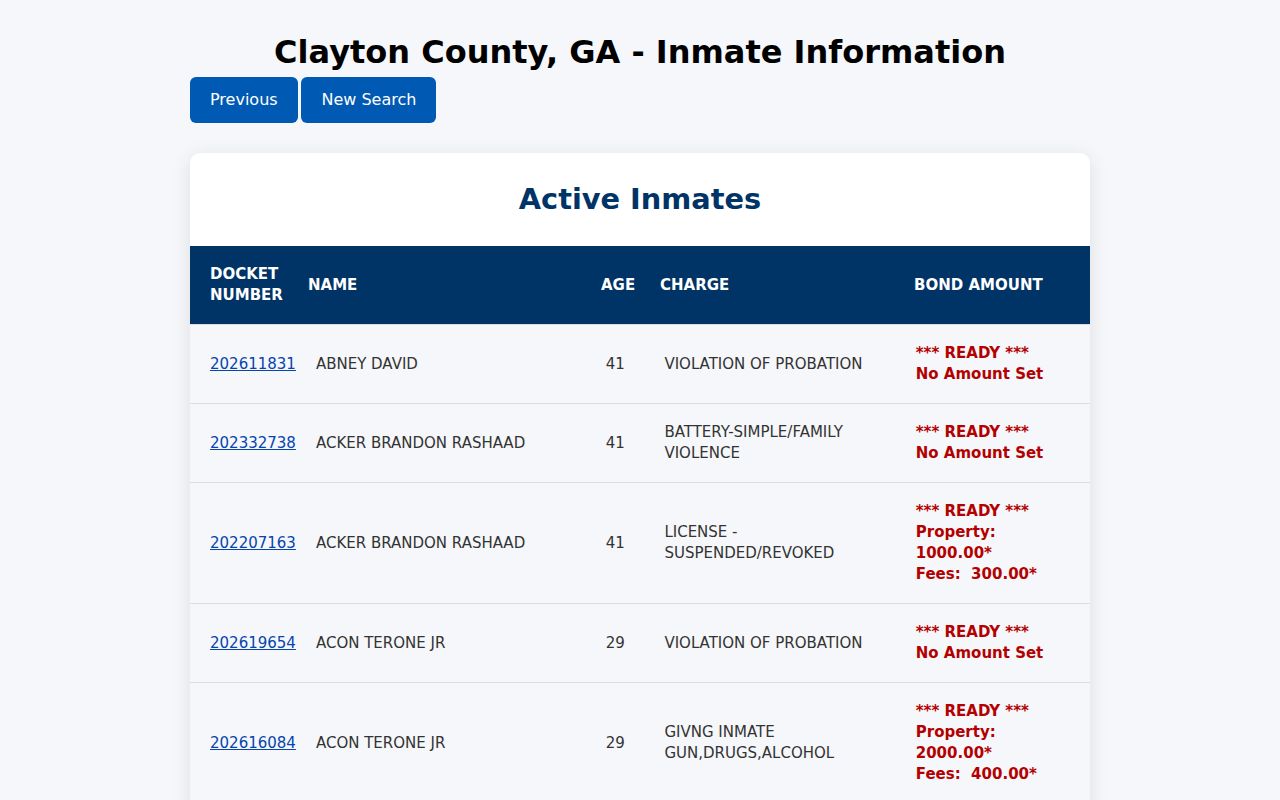
That compact row is enough to locate custody and follow the trail, but not enough to decide how the allegation ended.
| Docket Number | Identifier used to follow the jail entry. |
|---|---|
| Name and Age | Displayed identity fields that still require careful matching. |
| Charge | Initial allegation, not a final filed count or conviction. |
| Bond | Amount and operational status language subject to change. |
| Photograph | Intake can include a photograph, but no verified Clayton release rule was found. |
| Custody Status | Active or recent custody, not the final case outcome. |
Clayton Arrest Bond Status
Clayton's roster uses operational strings that should not be mistaken for findings of guilt. READY appears beside bond information, but the official expansion was not located. It should be treated only as displayed custody or bond status. “No Amount Set” is not the same as zero-dollar release. “Not Eligible” and “HOLDS” warn that a monetary line may not authorize immediate release.
Property and Fees appear as separate lines. The portal warns that amounts can change and extra fees are excluded. Property bond may require approved property or full cash plus fees, while cash bond requires cash plus fees. Confirm any payment or property step with the jail before acting.
Booking Logs and Recent Arrests
For very recent activity, open the 48-hour Docket Book first. Expand to the 14-day and 31-day books when the intake date is less certain, then use the active-name search to check current custody. Record the docket number, charge, and bond wording. Call the sheriff when the status is unclear.
A released person can disappear from active-name results while the police report, court case, and GCIC entry remain. The 14-day and 31-day books can help bridge that timing gap. Docket books organize booking events, not final outcomes. They also do not prove that every arrest led to prosecution. No official Clayton mugshot-release rule was located, so the booking log should not be described as a mugshot gallery.
Clayton Arrest Report Channels
Clayton County Police Records offers a detailed fallback for incidents created by that department. Its counter at 7911 North McDonough Street is open Monday through Wednesday from 8:00 a.m. to 4:45 p.m. and Thursday through Friday from 8:00 a.m. to 4:00 p.m., excluding holidays. Incident reports cost ten cents per page at the counter, and crash reports cost $5. Reports are usually ready in three to five business days, subject to mitigating circumstances.
The official CCPD Records page gives the counter and mail rules.
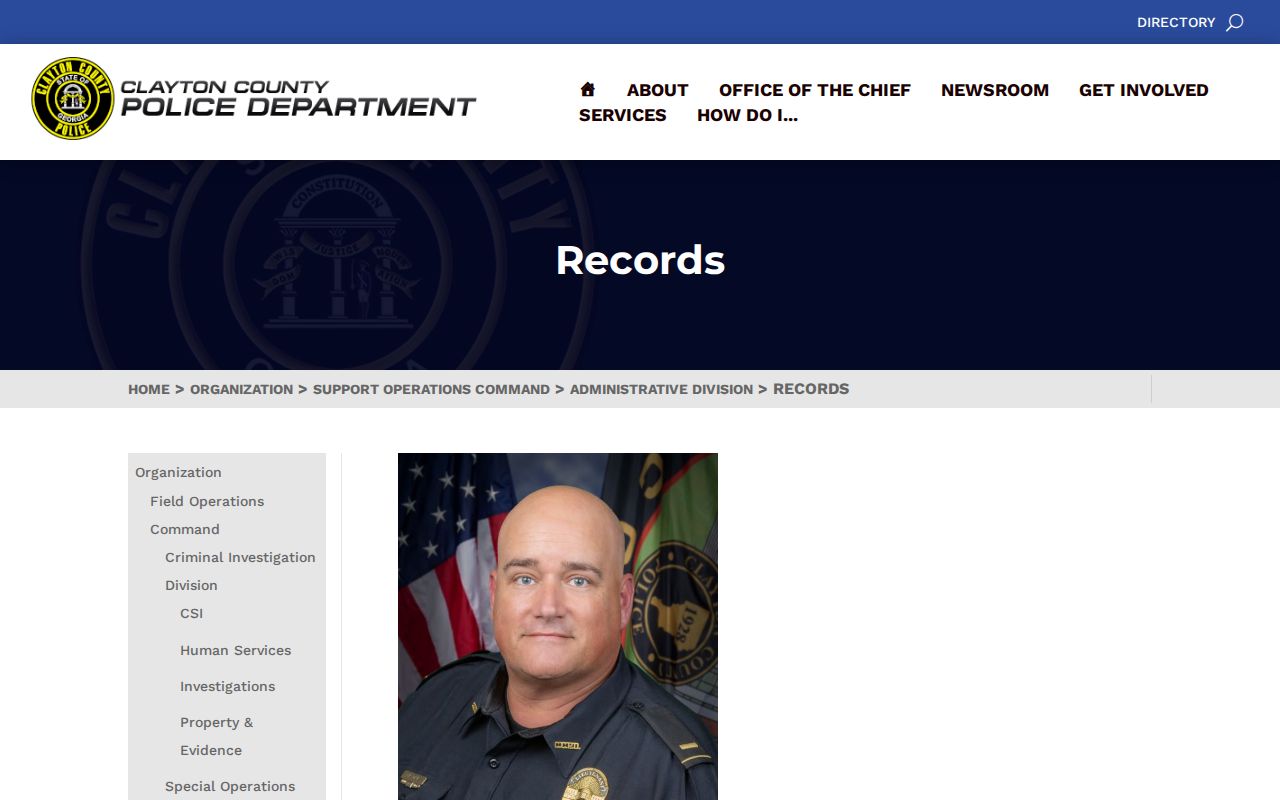
Mail requests need the CCPD case number, a self-addressed stamped envelope, and $2 for an incident report or $5 for a crash report, paid by money order or cashier's check. Family-violence reports follow a special agency rule: without an arrest they are unavailable, and with an arrest only the victim or defendant may obtain one.
Clayton Arrest and Crash Records
A crash report is not a general arrest history. CCPD links an outside service specifically for collision records, while incident narratives remain offline through its records channels. The agency-designated BuyCrash portal handles crash requests.
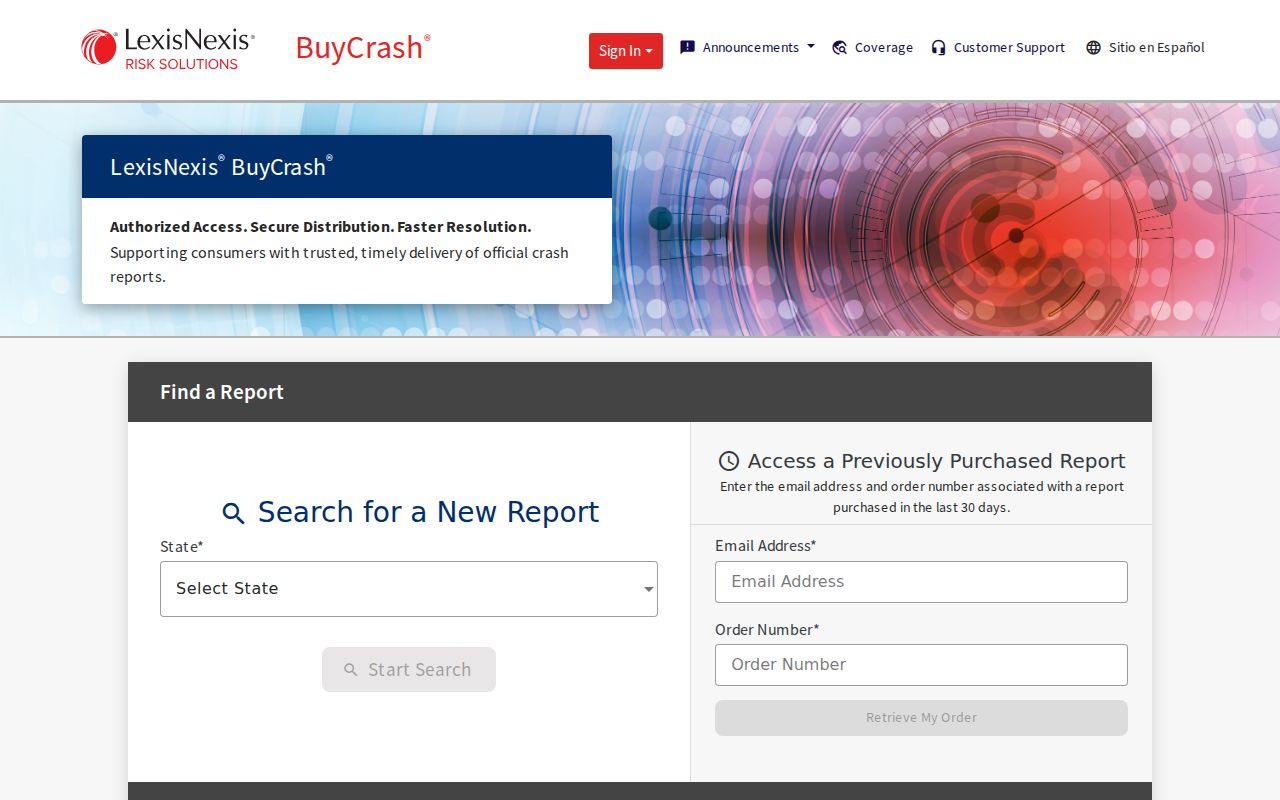
Use that vendor only for the record type the government page assigns to it. A collision report does not replace the jail roster, criminal docket, or agency incident report.
CCPD also publishes an official policy and procedure library.
The policy trail provides institutional context, but a current person-specific record still comes from the records unit, jail, or court custodian.
How Clayton Arrests Reach GCIC
The arresting agency sends identification, fingerprints, and charge data to the Georgia Crime Information Center's Computerized Criminal History system. Prosecutors and clerks later report accusations, indictments, and dispositions. Corrections and supervision agencies can add custody data. These feeds can arrive at different times.
The GBI overview explains GCIC's statewide role.
GCIC cannot independently change a supplying agency's inaccurate entry. A person correcting their own record should obtain a certified disposition and contact the contributor. Georgia Felon Search is narrower still: it shows a public felony-conviction slice, costs $15 per selected result or no-record response, and omits misdemeanors, juvenile felonies, and sealed or restricted entries.
Arrests Are Not Convictions
An arrest record documents that an agency took a person into custody on an allegation. A conviction requires a court finding or accepted guilty plea. Clayton's jail roster and police narrative may remain even when prosecutors file a different count, a grand jury returns no bill, or the court dismisses the matter. Read the court disposition before describing an outcome.
| Arrest Record | Conviction Record |
|---|---|
| Created by police and jail staff | Created and entered by a court |
| Shows custody on an alleged charge | Shows an adjudication of guilt |
| Lives with the agency and jail | Lives with the clerk and reported repository record |
| May lead to release, no filing, or dismissal | May lead to sentence, appeal, or eligible restriction |
Note: An arrest is not proof of guilt; verify the filed charge and final disposition with the proper Clayton County clerk.